Internet and Psychiatry
  • Home
    • Editorials
    • Research news
    • Research papers
    • Interviews with eminent psychiatrists
    • Ten years ago
    • Fifteen years ago
  • Topics
    • Alcohol and Drug Abuse
    • Anxiety Disorders
    • Biomedical Science
    • Compulsive gambling
    • Disaster Medicine
    • Education
    • General Medicine
      • Acupuncture
      • Physical medicine and Rehabilitation
    • Human Rights
    • Interviews with eminent psychiatrists
    • Mood Disorders
      • Bipolar Disorder
      • Depression
      • Seasonal Affective Disorder
    • Neurological Disorders
    • Other Psychiatric Disorders
    • Posttraumatic Stress Disorder
    • Sexual Behavior
  • Books
    • Comorbidity of Depression and Alcohol Use Disorders
    • “Immigration and Mental Health” chapter abstracts
    • “Internet and Suicide” chapter abstracts
    • “Neurobiology of PTSD” chapter abstracts
    • “Suicidal Behavior in Alcohol…” chapter abstracts
    • “Suicide in the Military” chapter abstracts
    • “Terror and Suicide” chapter abstracts
    • “War and Suicide” chapter abstracts
  • Editors
    • Leo Sher, M.D.
    • Alexander Vilens, M.S.
  • Guests
    • Distinguished Guests
    • Our Contributors
  • Reflections
    • Poetry
    • Quotes

Distinguished Guests

Sandor Kalmar M.D., Ph.D.
July 23, 2009

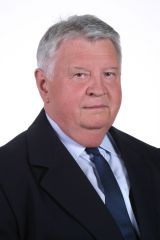
Sándor Kalmár M.D., PhD.Sándor Kalmár M.D., Ph.D. is a well-known teacher and physician in Bács-Kiskun County, Hungary. He is a psychiatrist with a background in neurology, social medicine and public health.

Dr Kalmár’s main areas of interest in Psychiatry, Neurology and Social Medicine and Public Health are psychopathology, disturbances of perception, depressive disorders, suicide and its prevention, the role of teaching of GP’s in suicide prevention, alcohol induced disorders, quality assurance in Psychiatry, Internet and Psychiatry, the role of Primary Health Care in the Psychiatry, education of medical students, teaching General Practitioners, psychiatrists, nonprofessional people and civilian population.

Dr. Kalmár participated in the Prototype Depression Recognition and Suicide Prevention Program in Eastern Europe: a Pilot Project in the region of Kiskunhalas, Hungary, which was supported by Prof. Dr. Herbert Hendin and Prof. Dr. J. John Mann on behalf of the management of American Foundation for Suicide Prevention (AFSP) similar to the Gotland study. During this education program run by Hungarian and American experts in psychiatry Dr. Kalmár participated in lectures and seminars.

Dr. Kalmár has lived and worked all his life in Bács-Kiskun County. He received his primary school degree in Baja, then he worked as a primary school teacher. After that, he studied at the University of Szeged. Dr. Kalmár received his M.D. degree from Szentgyörgyi Albert University in Szeged. He studied three medical specialities: Neurology, Psychiatry, and Social Medicine. He obtained a Summa Cum Laude PhD. degree from the Semmelweis University in Budapest for his doctoral dissertation titled, “The consequences of the self-destructive behaviour with special consideration of the suicide and its prevention opportunities. Bács-Kiskun County. 1995-2006.”

Dr. Kalmár is the editor of a book, and the author of the first Hungarian Psychiatric Dictionary, the first Hungarian Neurological Dictionary, the Hungarian version of the Complex Diagnostic Evaluation of Depressive Disorders by Thomas Ban, the Hungarian version of the Complex Diagnostic Evaluation of Hyperthymic Disorders by Peter Gaszner and Thomas Ban, Psychiatric Propedeutics, and some chapters in different books. He is the author of several medical articles.

In his leisure time, Dr. Kalmár likes listening music, travelling abroad and inland. He is interested in the Greek and Hindu mythology and religion.

He believes and accepts the following statements as basic principles:

  • What is our task in the world? To struggle for the noblest aims as our strength permits (Thoughts in the Library by M.Vörösmarty 1844.)
  • The person is not only the body and soul. Every human being has a lot of deep, complicated, ramified biological or somatic, psychic, cultural (mythological, historical, social) and spiritual roots. This is the foundation of each medical practice.
  • If we teach more we must cure less. (József Fodor)
  • It is only with one’s heart that one can see clearly. What is essential is invisible to the eye. (Antoine de Saint Exupery)
  • Everyone has to find his or her own way to the truth. (Father Georgi Tailov, 1990. Riga)

Related Posts

Distinguished Guests /

Carl (Chip) Lavie, Jr., M.D., FACC, FACP, FCCP

Distinguished Guests /

Jorge Ospina-Duque, M.D.

Distinguished Guests /

Jaanus Harro, M.D., Ph.D.

‹ Puneet Narang, M.D. › Zoltan Rihmer, M.D., Ph.D., D.Sc.

Editorials

  • The role of the h-index in academic medicine
  • A timeless commitment: Reflections on the Hippocratic Oath
  • Abraham Flexner history: Celebrated medical educator – improved physician training, yet also left a not well-known legacy  
  • Suicide medical malpractice: A conceptual perspective

Research Papers

  • COVID-19 mortality in Europe and the ’Iron Curtain’ between East and West
  • Examination of depressive signs and symptoms among 803 University students in seven Universities and Colleges. Hungary, Romania, Serbia.
  • Examination of spirituality and the dimensions of spirituality among 803 students in seven different Universities. Hungary, Romania and Serbia.
  • Examination of depressive signs and symptoms among 932 students in eight different secondary schools in Hungary

Research News

  • Blood alcohol concentration and suicide mortality in Finland
  • Suicide risk in older adults: clinical responsibilities and medico-legal considerations
  • Conceptualizing a combat veteran’s suicide death through the stress-diathesis model
  • No evidence of a causal link between glucagon-like peptide-1 receptor agonists and suicidal behavior

Latest News

  • FDA launches real-time clinical trial initiative
  • The 2025 ScholarGPS rankings of leading scholars in suicidology
  • Mental health support for healthcare professionals
  • The 2024 ScholarGPS ranking of scholars in the field of suicidology

Interviews with eminent psychiatrists

  • 2026 Interview with Professor Zoltan Rihmer
  • 2026 Interview with Doctor María Dolores Braquehais Conesa
  • 2026 Interview with Professor Shih-Ku Lin
  • Interview with Professor Jess G. Fiedorowicz

Ten Years Ago

  • Suicide malpractice
  • Testosterone levels and future suicide attempts in women with bipolar disorder
  • Bipolar disorder, testosterone administration, and homicide
  • The cosyntropin stimulation test in military veterans with or without posttraumatic stress disorder

Back to Top

  • About
  • Contact
  • Privacy Policy
  • Terms and Conditions
Copyright © 2025 AVCalc LLC. All rights reserved worldwide.